
Offer products and additional services
You can offer products to your bookers and attendees in addition to tickets. These products can be free of charge or, for paid events, available at an additional cost. They can also be limited to a specific capacity. Typical use cases include optional event add-ons such as catering, VIP packages, ticket shipping, accompanying workshops with limited attendance, or optional evening events.
Using doo On-site Management, you can scan an attendee’s ticket again during the event to verify whether a product from a specific product category has been booked. This allows you, for example, to ensure that only attendees who registered in advance can attend a particular workshop.
Unlike ticket categories, products are not selected during the ticket selection step of the booking process. Instead, they are offered in the subsequent attendee details step, where the booker can add them by selecting a checkbox.
1. Creating products
You can create product categories in step 3 of the event creation (“Attendee details”). All information about this step and how to navigate there can be found in this article.
Products can be added in the sections “Attendee details” or “Booking details” respectively: Products under “Attendee details” can be added once for each registered attendee, i.e. once per booked ticket, while products in the “Booking details” section can be added once per booking.
When creating a new product category, you can specify a name, a short description, the capacity, and – for fee-based events – a price.
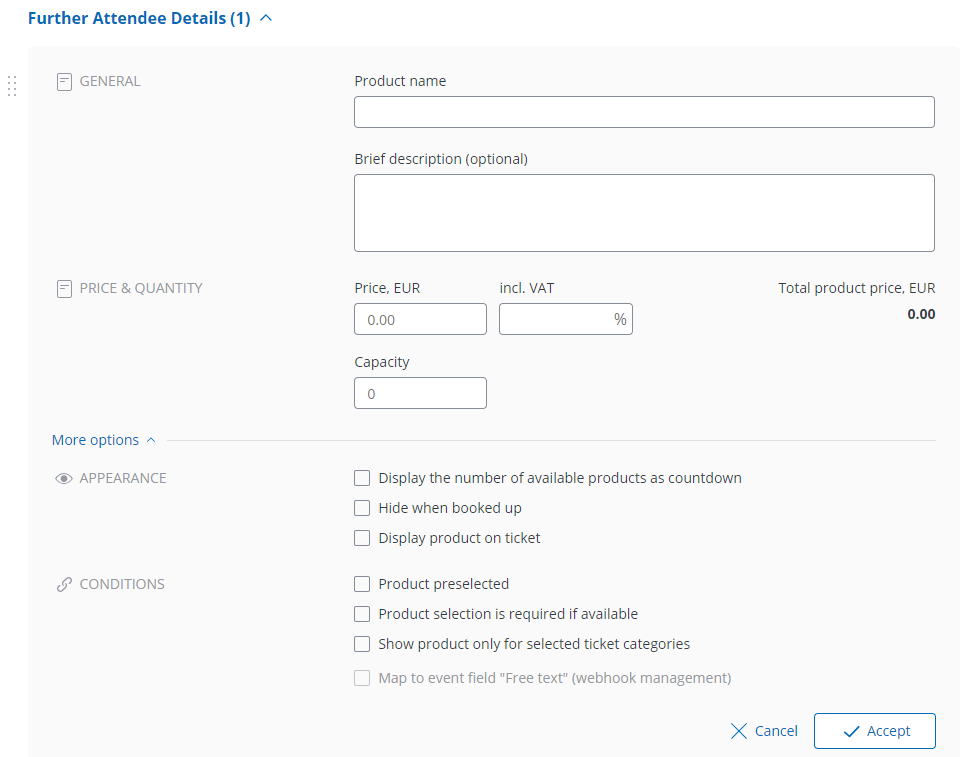
Under “More options”, you can make the following settings:
- Display the number of available tickets as a countdown: The number of products still available is displayed to the bookers in the booking form.
- Hide when booked up: The product category will be completely removed from the invoice form as soon as it is no longer available.
- Display product on ticket: Products that were added on booking level will be displayed on all tickets of the same booking – products booked on attendee level will only show up on the ticket of the corresponding attendee. Please note that this setting only refers to the doo standard tickets: As soon as an individual ticket design has been stored for your event, the settings you provided to our team as part of the ticket requests will apply. You can find all information about individual ticket designs here.
- Product preselected: The product category is preselected in the booking form, bookers can remove the preselected selection when booking.
- Product selection is required if available: The product category is preselected in the booking form, bookers cannot remove the preselected selection when booking.
- Show product only for selected ticket category: The product category can only be selected when certain ticket categories have been selected – this feature is only available for Enterprise users.
After you have created your product category, you can change the order of custom question and products by dragging and dropping, as described in this article.
Once an event has gone live, product categories can no longer be deleted for documentation reasons. However, you can reduce the capacity to 0 or rather to the number of products that were already booked and tick “Hide when booked up” under “More options”. This means that the product category will no longer be displayed in the booking process and can no longer be booked.
2. Create product groups
The created product categories can also be grouped into product groups to provide the booker with a better structure in the booking process and to control the number of selected product categories within a group, e.g. grouping workshops that will take place at the same time and only allow bookers to select one per group.
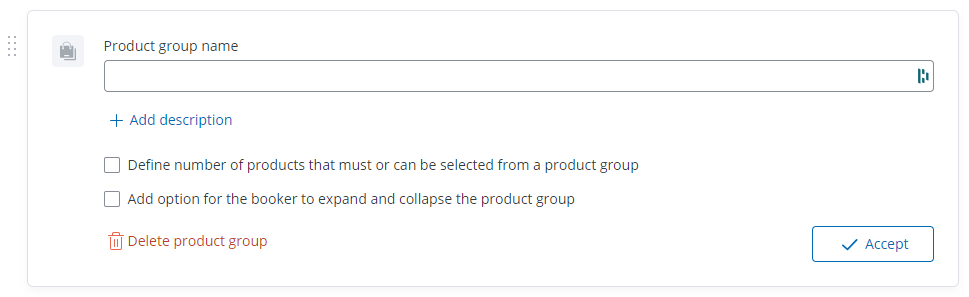
When creating a new group you can define how many products a booker must or can select. You can also decide whether the individual product groups can be expanded and collapsed, which offers the booker a clearer booking in case you offer many different product categories.
After you have created a product group, you can either drag and drop an already created product category into the product group or create a new product category directly in the group by clicking on the dropdown icon on the right and then on “Create new product” at the bottom.
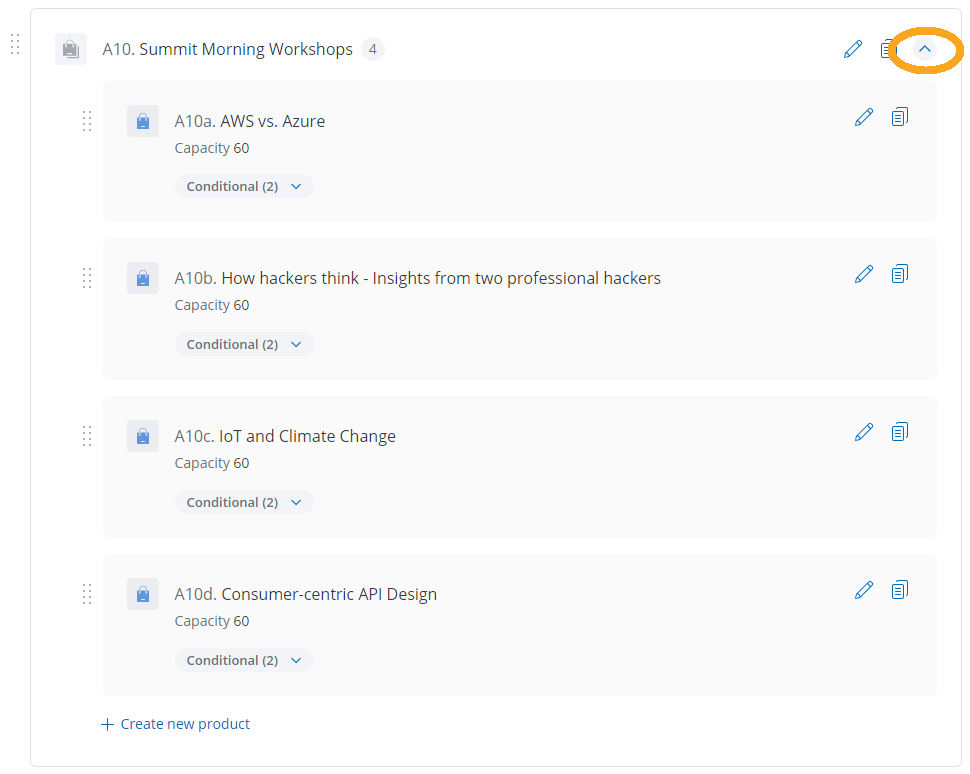
Please note that a product group that contains at least one product category cannot be deleted. To delete a product group, all product categories must first be either deleted (no longer possible after an event has gone live) or placed outside the product group using drag & drop. After that, a recycle bin icon for deleting the group appears in the upper left corner.
3. Current overview of booked products
You can view the current status of your product bookings and remaining capacities at any time in your event details by selecting your event from the overview.
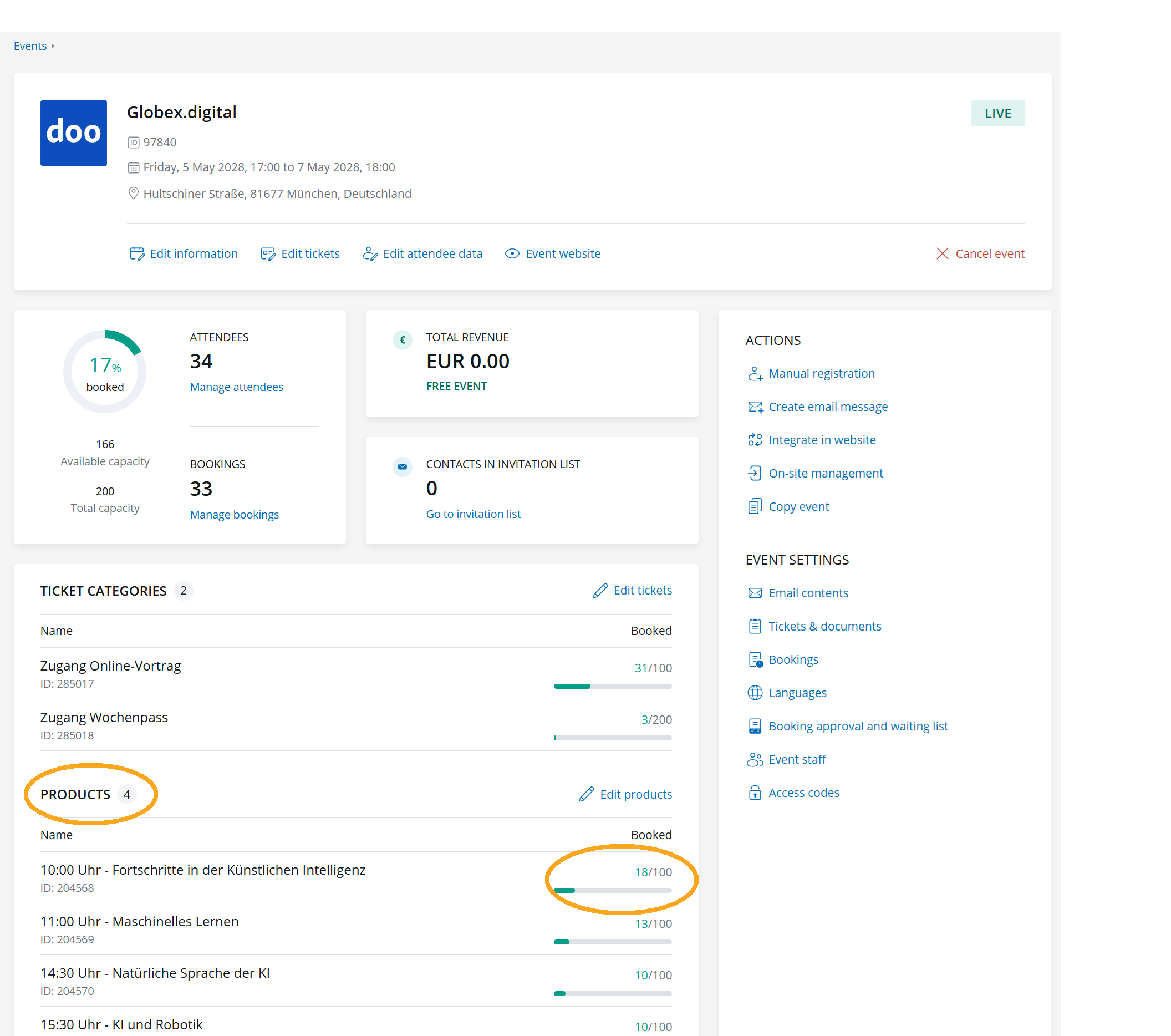
You can see which products were purchased as part of a booking in the attendee details within both the Attendee Overview and On-site Management, as well as in the booking details of the respective booking. The booked products of a booker or attendee are also included in the downloadable booking overviews and attendee lists: Products added in the “Booking Data” section appear in the event’s booking overview, products created at the attendee level appear in the corresponding attendee list. You can find information on where to access and download these lists in our article on downloading booking and attendee overview.
4. Checking In Booked Products
With doo On-site Management, you can use product check-in to verify whether an attendee has booked a specific product category by scanning their ticket with a handheld scanner. Similar to the standard ticket check-in process, the booked product can then be checked in and marked as redeemed.
When product check-in is enabled, you can also manually check individual attendees into a product category via the attendee overview.
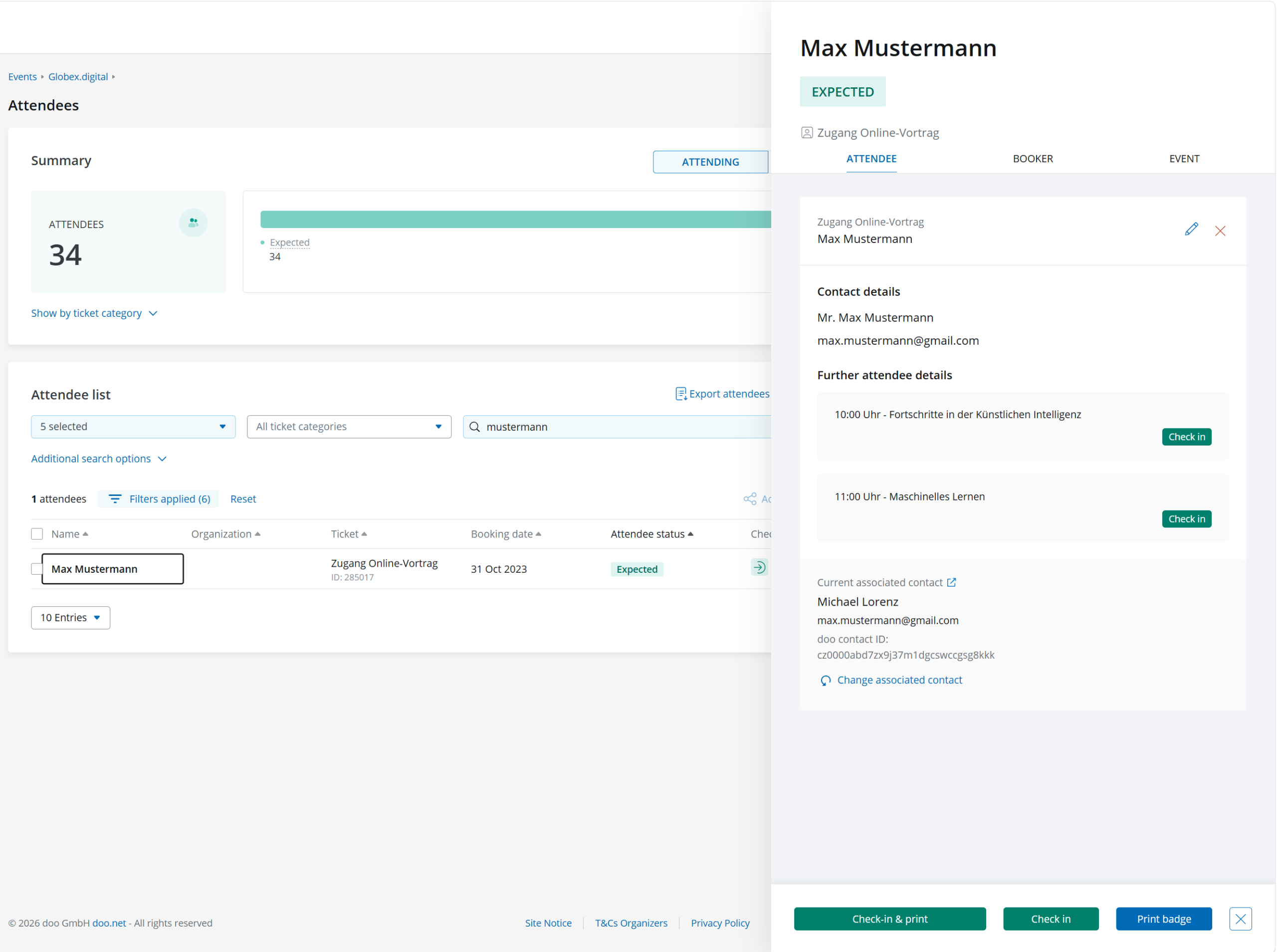
For detailed information on how to enable product check-in and how the check-in process works, please refer to our Access Management article.